


Once upon a time, college football was different. It was messy, imperfect, and gloriously amateur. Now, it’s just a minor league with mascots.
The beauty of college football was always rooted in what made it flawed. Players stayed for four years, developing loyalty to their schools and communities. Coaches built programs brick by brick, given time to install cultures and develop identities. Rivalries mattered because they were about pride, not profit margins.
That version of the sport is dying, suffocated by a tidal wave of money that’s transforming college football into something unrecognizable.
The NIL Gold Rush
When Name, Image, and Likeness (NIL) deals became legal in 2021, proponents promised it would finally allow student athletes to benefit from their talent. The reality? It’s created a pay to play system where the richest boosters simply buy rosters.
The transfer portal, combined with NIL and direct revenue sharing, has fundamentally reshaped the competitive landscape.¹ Players now switch schools as freely as professional free agents, chasing the highest bidder rather than building legacies. The four year player development cycle that once defined college football has been replaced by an annual mercenary marketplace.
Sure, athletes deserve compensation. But somewhere between exploitation and full blown free agency, we lost the middle ground that made college football special.
The $50 Million Pink Slip
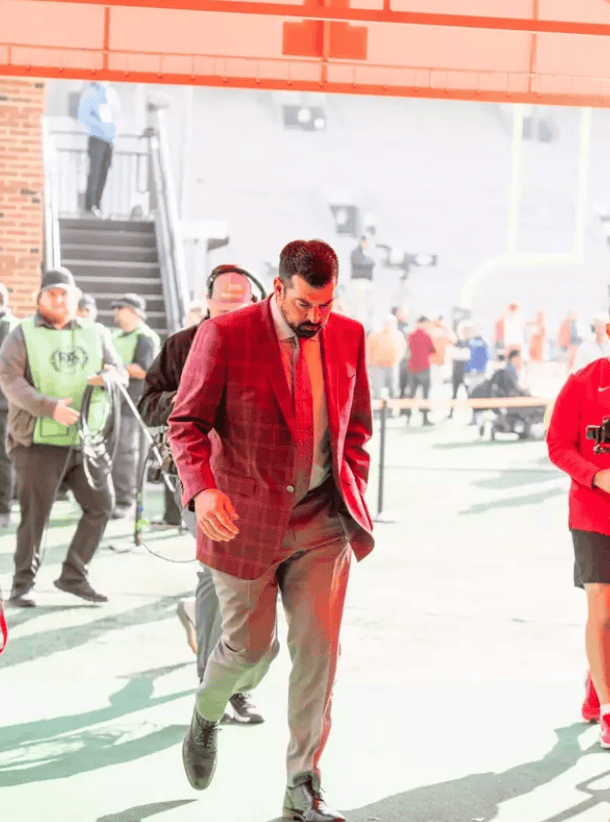
Penn State just fired James Franklin after a 104 to 45 record over 12 seasons, owing him approximately $49 million.² If Florida State moves on from Mike Norvell, who went 13 and 0 in the regular season just two years ago, they’ll owe him over $50 million.²
Read those numbers again. Fifty. Million. Dollars. To not coach.
These astronomical buyouts reveal a system that’s completely broken. Universities are spending enough money to fund entire academic departments just to fire coaches who’ve committed the cardinal sin of losing a couple of games they were supposed to win.
The pressure has become so intense, the stakes so inflated, that patience is now considered a luxury programs can’t afford. The sport has entered an era where programs are caught between two competing philosophies: the traditional expectations of dominance versus the new reality of unprecedented competitive parity.²
When Winning Loses Its Meaning
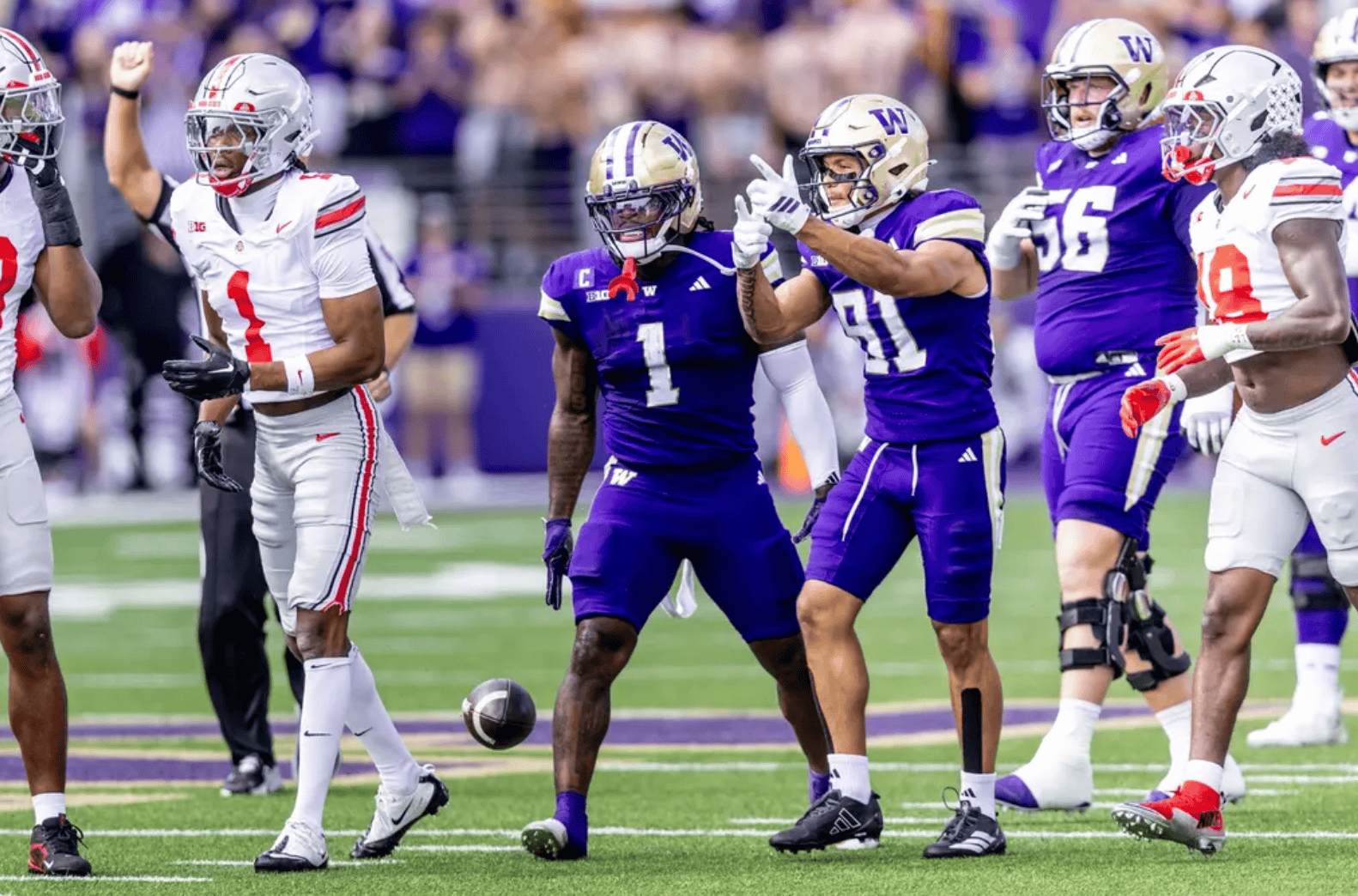
Vanderbilt defeated LSU and has climbed to its highest ranking since 1947.³ UAB shocked 23.5 point favorite Memphis in a stunning upset.⁴ Arizona State went from losing by 32 points to beating a top 10 team two weeks later.
On the surface, this parity sounds exciting. Every team has a chance! Cinderella stories abound! But this “parity” isn’t the result of better coaching or smarter recruiting. It’s the product of roster mercenaries jumping ship mid season and booster collectives outbidding each other for talent.
The transfer portal has turned college football into a revolving door. Players who were once part of a program’s identity are now here today, gone tomorrow. Fans invest emotionally in young athletes, only to watch them leave for a bigger NIL deal before they’ve played a full season.
The Death of Tradition
College football’s greatest asset was always its traditions. The pageantry, the marching bands, the student sections, the decades old rivalries that transcended sport. These elements created an atmosphere professional football could never replicate.
But when everything becomes transactional, tradition loses its power.
Notre Dame and USC just played what may be their final matchup for the foreseeable future.⁴ Conference realignment, driven entirely by television contracts and revenue, is tearing apart geographic rivalries that existed for over a century. Texas and Texas A&M didn’t play for years because money dictated they belonged in different conferences. Oklahoma and Nebraska, once bitter rivals, became afterthoughts in different leagues.
The sport’s governing bodies have shown they’ll sacrifice any tradition, any rivalry, any shred of regional identity if it means securing a larger TV deal.
The Professionalization Problem
The fundamental issue is this: we’ve professionalized college football without admitting we’ve professionalized it.
Players are paid like professionals through NIL deals. Coaches are paid like professionals, many earning more than NFL head coaches. The transfer portal operates like professional free agency. Conferences realign based purely on television revenue, just like professional leagues.
But we still call them “student athletes.” We still maintain the fiction that these are primarily students who happen to play football on the side. We still pretend there’s something pure and educational about a system where teenagers are negotiating six figure endorsement deals before attending their first class.
The cognitive dissonance is staggering.
What We’ve Lost
The old system was far from perfect. Players were exploited, coaches hoarded power, and the NCAA operated like a corrupt cartel. Reform was desperately needed.
But in our rush to fix those problems, we’ve dismantled everything that made college football distinctive. We’ve turned it into a worse version of professional football: one with less stability, less loyalty, and less competitive integrity than the NFL, but with all the same mercenary dynamics.
We’ve traded the sport’s soul for a fair market value, and discovered too late that some things can’t be quantified on a balance sheet.
College football used to be about young men representing their schools, their communities, their states. It was about players and coaches building something together over four years. It was about rivalries that meant something beyond television ratings.
Now? It’s about who has the deepest pockets.
The Point of No Return
Direct revenue sharing is the latest seismic change in a sport that’s also absorbed NIL, the transfer portal, conference realignment, and an expanded playoff.² Each change was sold as progress, as necessary evolution, as finally making college football “fair.”
But fairness and authenticity aren’t the same thing. You can create a fair system that still feels soulless.
College football has never been this competitive or this unpredictable.² Games are closer, upsets happen weekly, and more teams remain in playoff contention deeper into the season. By the numbers, this should be the golden age of the sport.
So why does it feel like we’re watching something die?
Maybe it’s because we’ve learned that not everything broken should be fixed with money. Maybe it’s because we’ve discovered that when you reduce a sport to pure market forces, you lose the intangible qualities that made people fall in love with it in the first place.
College football is making more money than ever. Television deals are worth billions. Players are becoming millionaires. Coaches are earning NFL level salaries.
And somehow, in gaining all of that, we’ve lost what mattered most.
The charm is gone. And it’s not coming back.
Sources
¹ ESPN. “Any Given Saturday: New college football paradigm brings chaos, huge buyouts.” October 21, 2025.
² ESPN. “Any Given Saturday: New college football paradigm brings chaos, huge buyouts.” October 21, 2025.
³ CBS Sports and Yahoo Sports. “College football scores, highlights in Week 8.” October 19, 2025.
⁴ CBS Sports. “College football scores, rankings, highlights in Week 8.” October 19, 2025.

Leave a Reply